
Automated micro-fulfillment
transforms retail logistics

How automated micro-fulfillment transforms retail efficiency
Improving efficiency and speed
E-commerce growth has changed what customers expect from retailers. People now want their online orders delivered quickly, sometimes on the same day. Automated micro-fulfillment centers (MFCs) have become an effective way for retailers to meet these demands while keeping operations efficient and costs under control.
Market trends
E-commerce continues to expand rapidly, driving the need for efficient fulfillment solutions. In the United States, the retail e-commerce market reached nearly $1.2 trillion in 2024—an 8.7% increase over the previous year—with forecasts pointing to further growth of in 2025 (US Ecommerce Forecast 2024, US Ecommerce Forecast 2025).
Europe sees similar momentum, with B2C e-commerce turnover rising to €819 billion in 2024, up 7% from 2023, and another 7% increase projected for 2025 (Executive Summary Ecommerce Report 2025). These trends highlight why flexible, scalable fulfillment infrastructure like automated micro-fulfillment is becoming increasingly important for retailers.
On a global scale, the micro-fulfillment center (MFC) market is valued at $12.4 billion in 2025, and is projected to grow to $22 billion by 2029, reflecting a compound annual growth rate of approximately 14%. This strong upward trajectory demonstrates that automated MFCs are becoming a core strategic investment for retailers worldwide (Research and Markets 2025).

Why micro-fulfillment matters in e-commerce
Staying competitive often means getting products to customers faster, especially for groceries and same-day deliveries. Micro-fulfillment can help by using small, automated warehouses located close to where customers live - often within 5-10 miles (8-16 km) in urban settings. Some even push closer for 30-minute grocery deliveries.
Key advantages of micro-fulfillment
- Shorter delivery times,
- Lower operating costs compared to large distribution centers,
- Better fit with current consumer habits like online grocery shopping and curbside pickup.
Running micro-fulfillment centers in existing retail locations or close by allows businesses to use their space more efficiently and avoid large upfront expenses.
The growing demand for fast fulfillment
Big companies like Amazon have set a new standard for delivery speed. As two-day delivery has become common, customers increasingly expect groceries and other goods in just a few hours.
The competitive landscape
Walmart, Instacart, and Amazon continue to lead in grocery pickup and delivery within North America, but the global market for automated micro-fulfillment centers (MFCs) is quickly expanding.
Companies such as Exotec, Dematic, AutoStore, Ocado Intelligent Automation, Takeoff Technologies, Attabotics, Geek+ and Fabric have established themselves as robust solution providers, offering technology and support for large and mid-sized retailers. The Utz Group delivers specialized packaging solutions for seamless integration with projects undertaken by these system integrators.
Significant growth is observed in this sector across the US, European, and Asia-Pacific regions, as businesses increasingly invest in automation to enhance service levels and address rising online demand.

How automated micro-fulfillment works
These centers use technology such as robotics and artificial intelligence to handle orders more efficiently. Instead of workers walking around picking individual items, robots bring products directly to staff, saving time and reducing errors.
Benefits of automation
- Faster operations – A Walmart pilot demonstrated 20% faster assembly, with many MFCs offering delivery within hours.
- Reliable accuracy – These systems often reach 99% or better accuracy, leading to fewer mistakes and returns.
- Better inventory management – Automated storage reduces waste, which is especially valuable for fresh and perishable products.
Retailers can adapt these systems to handle different types of products, including items that need refrigeration or freezing, to maintain quality and reduce food waste.

How Utz improved Frisco’s fulfillment process
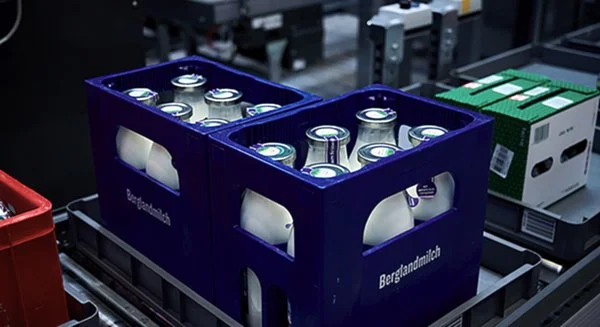
Frisco, a Polish online grocery retailer, faced a surge in demand for same-day deliveries. To adapt, they partnered with Utz and TGW Logistics to upgrade their fulfillment process and handle more orders.
- EUROTEC storage containers: Improved product handling and streamlined the shuttle system.
- Nestable delivery containers: Saved space on return trips and enhanced delivery efficiency.
The results were impressive: Frisco processed four times more daily orders and reduced delivery times, enabling fast, reliable same-day service. The updated system also cut waste and improved order handling.
If you want to see more details about how Utz supported this project, read the full Utz case study on Frisco.


Current trends in micro-fulfillment
The micro-fulfillment landscape continues to evolve, driven by technological advancements, shifting consumer behaviors, and economic pressures. As you evaluate solutions for your operations, understanding these key trends is essential for making informed, forward-thinking decisions.
Addressing labor challenges with automation
Labor shortages and rising wages challenge retail and logistics operations. Automation in micro-fulfillment centers reduces the need for manual labor in repetitive tasks like picking and packing. However, it creates a new demand for skilled technicians and IT staff to manage these systems, emphasizing the need for workforce training alongside technology adoption.
The impact of AI and data analytics
AI and data analytics are making fulfillment more efficient and precise. Generative AI is now widely used to improve demand forecasting, helping retailers reduce errors and anticipate trends more accurately (Intellias). Deloitte also highlights that automation and data-driven forecasting drive both cost efficiency and margin improvement (Deloitte Retail Trends 2025).
Retailers like Walmart and Carrefour use computer-vision systems to manage inventory in real time, flagging out-of-stocks and misplaced items quickly (XenonStack). This cuts manual work and keeps products available for customers.
Dynamic SKU slotting, where AI and computer vision optimize product placement within fulfillment centers, now helps increase picking speed and lower labor costs. By using data to guide inventory flow and layout, retailers can streamline operations and respond better to customer needs.
Expanding omnichannel integration
Modern retail extends beyond single channels. Micro-fulfillment enables a seamless omnichannel strategy, supporting in-store, curbside pickup, and dedicated dark stores for exclusive fulfillment. This integration provides the flexibility to meet customers wherever they choose to shop, fostering a consistent and convenient brand experience.
Regional expansion in APAC and Europe
While North America was an early adopter, the micro-fulfillment market is now experiencing rapid growth in the Asia-pacific (APAC) and European regions. As global e-commerce accelerates, retailers in these markets are investing in automated solutions to gain a competitive edge. This expansion reflects the growing global recognition of micro-fulfillment as a standard for efficient retail logistics.
Driving sustainability and efficiency
Rising energy costs and a stronger emphasis on sustainability make efficiency more important than ever. Modern micro-fulfillment centers (MFCs) are engineered to use less energy than traditional warehouses and to minimize transportation distances for last-mile delivery. Notably, MFCs can reduce CO₂ emissions per order by 35–50%, according to BCG's Sustainability in Last Mile 2025. This significant reduction helps retailers meet environmental goals while also lowering operating expenses.
Evolving customer expectations
Consumers today expect more than speed; product freshness, particularly in grocery, is paramount. They also value transparent ordering and seamless returns. Micro-fulfillment meets these demands by enabling faster, more accurate order processing and providing the operational framework to efficiently manage complex logistics, including reverse logistics.
Managing profitability and last-mile costs
While micro-fulfillment enhances efficiency, the high cost of last-mile delivery remains a significant profitability challenge. Retailers must balance the expense of rapid delivery with consumer willingness to pay. This is driving innovation in route optimization, delivery vehicle selection, and logistics partnerships to control final-mile expenses and protect margins.
The rise of modular and flexible solutions
Historically, high initial investment costs have been a barrier to automation for smaller retailers. In response, providers now offer more modular and scalable solutions, like robotics-as-a-service (RaaS) models. This approach allows you to deploy automation with lower upfront capital expenditure and scale the system as your business grows, making advanced fulfillment technology more accessible.
Shifting labor dynamics and the rise of technical roles
In 2025, U.S. warehouse job openings are projected at 350,000, down 12% year-over-year, reflecting reduced manual roles. At the same time, demand for robotics technicians is expected to grow by 22% as automation advances, highlighting the need for a workforce skilled in operating and maintaining modern fulfillment systems.
Integration of autonomous mobile robots and robotic picking arms
A key trend shaping modern fulfillment is the integration of diverse robotic technologies. While shuttle systems provide high-density storage and retrieval, their effectiveness is amplified when complemented by autonomous mobile robots (AMRs) and robotic picking arms. This combination creates a more comprehensive and intelligent automation ecosystem within your micro-fulfillment center.
Challenges for retailers adopting micro-fulfillment
While automated centers offer clear advantages, there are some challenges to address:
- Startup costs – Building micro-fulfillment spaces still requires financial investment, even if costs are lower than for traditional warehouses.
- Space limitations – These systems work best when carefully designed to fit into existing stores without disrupting other operations.
- Implementation complexity – Success depends on choosing the right technology and working with experienced partners.
Practical advice
Retailers should look at their business needs and work with vendors who have proven experience to ensure a smooth rollout.
ROI and payback period
Investing in automated micro-fulfillment is a strategic decision that requires a clear understanding of its financial returns. Based on industry data, including insights from MHI and NY Engineers, micro-fulfillment centers (MFCs) offer a compelling return on investment. The typical payback period for an MFC ranges from 2.5 to 4 years, depending on factors like initial investment, site conditions, and operational scale.
This rapid payback is driven by significant operational efficiencies. Automation dramatically reduces order processing times and minimizes reliance on manual labor, which directly lowers per-order costs. By processing orders up to ten times faster than manual methods, you can increase throughput and sales volume without a proportional increase in expenses. The combination of reduced labor costs and higher productivity makes automated micro-fulfillment a financially sound investment for achieving long-term profitability and a competitive edge.

What’s ahead for micro-fulfillment
As technology develops, micro-fulfillment will be used in more industries, such as beauty, pharmaceuticals, and everyday goods.
Sustainability benefits
- Delivering from locations close to customers means less travel, which can lower emissions.
- More efficient systems also use less energy, which helps keep operating costs and environmental impact down.
As costs decrease and systems become more flexible, even smaller businesses will find it easier to adopt automation.
Key takeaways
Automated micro-fulfillment allows retailers to manage rising costs and protect profitability, even as last-mile delivery expenses pressure margins. Flexible, scalable solutions mean smaller businesses can now access automation without major upfront investment. By improving efficiency and supporting growth, these systems help companies of any size stay competitive in a changing market.

Ready to optimize your fulfillment process?
Want to learn how micro-fulfillment can streamline your business? Reach out to our automation experts for practical advice.


